smarttag samsung
- 3.8
- Rating
- 50.00K
- Installs
- Free
- Price
 Analysis by App-foxy
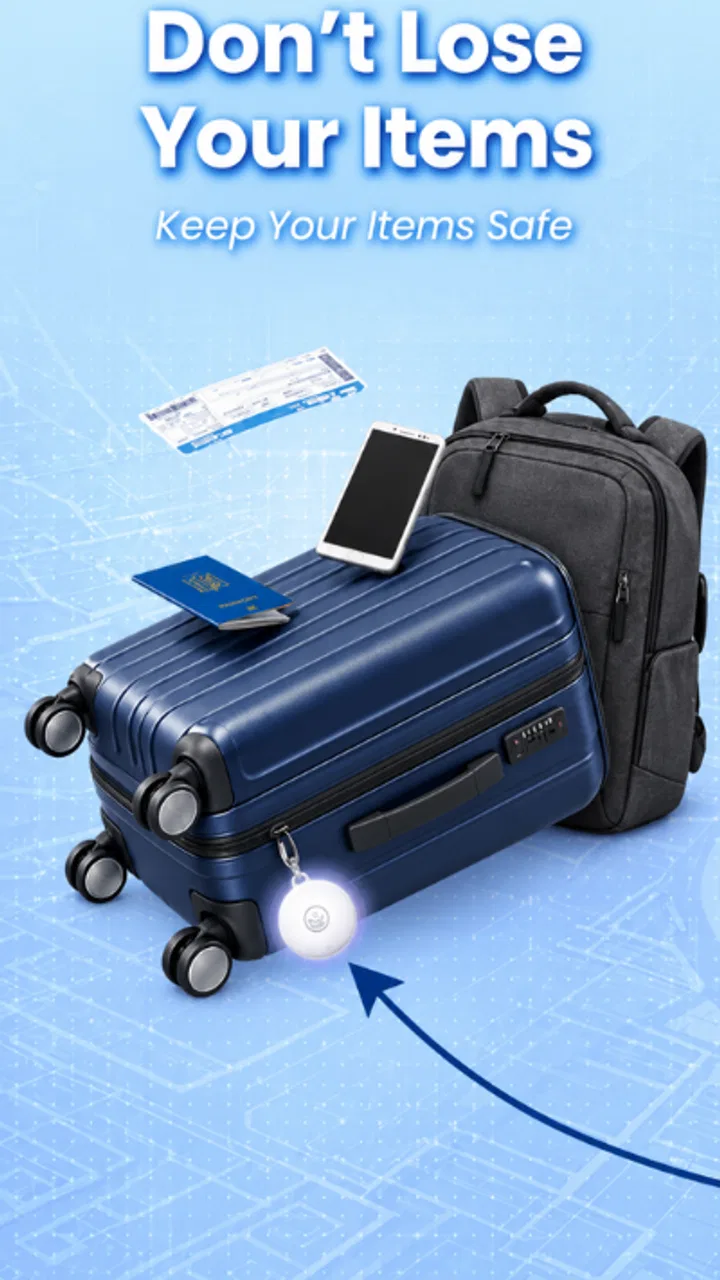
Finding a small SmartTag device is only useful if the phone can connect to it without turning the process into a guessing game. That is where smarttag samsung aims to help. I approached it as a first-time user would: install the free app, look for a nearby tag, and try to reach a clear result rather than spend time exploring menus. The app comes from DTFHM and sits in the Libraries & Demo section, although its practical purpose is much more straightforward than that label suggests.
My overall impression is that it is a focused companion for people who already have compatible Smarttag devices and want a simple place to find them. It is not presented as a broad phone-maintenance tool or a general library of accessories. Its store summary is centered on connecting with and finding Smarttag devices, so the most sensible way to judge it is by how quickly it helps with that specific task.
The app is free and intended for Everyone, which makes it approachable for a household where several people may need to use it. It has an average rating of 3.9 from around 500 ratings, with a smaller set of written feedback behind that score. That tells me to keep expectations practical: this is worth trying when its purpose matches your need, but I would not install it expecting a polished all-purpose tracking platform.
You May Also Like

 Blood Strike: 2.5 Anniversary
Blood Strike’s Loadouts Turn Every Drop Into a Tactical Gamble
A close look at Blood Strike’s custom loadouts: how fast access to signature weapons reshapes its battle royale rhythm, rewards preparation, and narrows the gap between fights.

 Pandora - Music & Podcasts
Pandora’s Music Is Easy to Start, but Harder to Recover
Pandora’s strength is its low-effort path from a seed to a station. Its weak spot is how much confidence it asks you to place in connection, setup, and quiet recovery.

 8 Ball Pool
 Is Built on Rivalries, Rematches, and Routine
A close look at the rivalries, rematches, shared routines, and unanswered safety questions that turn a quick pool match into a persistent mobile community.

 Samsung Music
’s Quiet Strength Is Playing What You Already Own
Its reach comes less from spectacle than from dependable access to a personal library. That simplicity is both the app’s strongest retention engine and its ceiling.

 AccuWeather: Weather Radar
AccuWeather Review: A Quick, Clear Forecast for Everyday Decisions
For everyday plans, the best forecast is the one you can understand quickly. AccuWeather makes rain timing, radar, and local conditions easy to act on, with a few trade-offs.

 Hill Climb Racing
Why Hill Climb Racing Still Turns Crashes Into One More Run
A tiny car, a bumpy hill and one more upgrade: Hill Climb Racing keeps resurfacing because its simple chaos makes every near-miss feel personal.
More From Our News Desk



What to expect before you begin
The first thing to understand is the relationship between the app and the physical Smarttag device. The app cannot replace the tag itself. Its job is to help your phone connect with the device and locate it, so the useful starting point is having the tag close by, powered, and ready to be recognized. If you are installing it simply to track a bag without owning a Smarttag, there is no meaningful result to expect from the app alone.
I also recommend treating the app as a targeted utility rather than a permanent source of entertainment or information. The short store description is simply “smarttag,” and the longer summary focuses on connection and finding. That narrow scope is actually helpful for a first-time user: there are fewer reasons to wander through unrelated sections, and the main question stays clear—can the phone establish contact with the tag and help me find it?
The current release is version 32.0, and the app can run on Android 7.0 or later. In everyday terms, that gives it a reasonably broad reach among older Android phones, although the experience will still depend on the phone itself and the Smarttag hardware you are using. A newer app version does not automatically make every older device behave identically, so I would keep the phone updated and avoid judging the app before completing a clean setup.
There is also an important distinction between “finding a device” and “finding an object in every possible situation.” If the tag is far away, unavailable, or not ready to communicate, the app may not give you the immediate success you hoped for. That is not a reason to keep tapping randomly. It is better to move closer to the tag, check that you are working with the intended device, and repeat the connection attempt in a calm, controlled way.
Who will get the most from it
I see the strongest use case in a person who owns one or more Smarttag devices and wants a dedicated way to check them from an Android phone. It can also suit a family member who is not comfortable with complicated technology, because the goal is easy to explain: connect the phone to the tag, then use the app when the tagged item needs to be found.
A realistic example is a set of keys that usually disappears somewhere between the front door, a coat pocket, and the sofa. Rather than searching the whole home immediately, I would open the app, keep the phone near the likely area, and try to establish contact with the tag. If the connection succeeds, that gives me a more useful direction than simply relying on memory. The benefit is not magic; it is reducing the search from “anywhere” to a smaller, more deliberate area.
The app is less suitable for someone who wants a complete inventory system, detailed automation, or a unified dashboard for many unrelated smart-home products. I would also look elsewhere if your main need is managing a different brand of tracker. A focused Smarttag tool makes sense when the hardware and the app belong in the same workflow; otherwise, a manufacturer-supported alternative for your actual device is likely to be less frustrating.
Setting it up without unnecessary confusion
For a first attempt, I would keep the installation simple. Use an Android phone that meets the app’s minimum operating-system requirement, place the Smarttag close to you, and make sure you are not beginning the test while the tag is hidden in another room or buried inside a crowded bag. The closer and more obvious the starting conditions, the easier it is to tell whether the initial connection is working.
After opening the app, look for the path that relates to connecting or finding a Smarttag device. I would avoid changing several phone settings at once. If the app asks for a normal connection-related action, complete it, then give the app a moment to respond before trying again. Rapidly repeating taps can make a simple setup feel broken when the real issue is that the first attempt has not finished.
The most useful setup habit is to test with one tag at a time. If you have several devices nearby, temporarily separate them or identify the one you intend to use first. This creates a clean test: one phone, one app session, one physical tag. Once that works, adding another device becomes easier to understand because you already know what a successful connection looks like.
I would also write down a small piece of practical information during setup: where the tag is attached and what it is meant to protect. That sounds obvious, but it prevents a common household problem in which several similar tags become difficult to distinguish. The app may help with connection, but it cannot compensate for tags that have been attached randomly and forgotten.
If the first attempt does not work, I would not immediately uninstall the app. Start with the physical basics: bring the phone closer, check that the intended tag is present, and repeat the connection process from the beginning. Then confirm that the phone is running a supported Android version. These checks are more useful than assuming the app has failed after one unsuccessful tap.
The first meaningful success
The first success should be concrete, not theoretical. I would define it as seeing the intended Smarttag recognized by the app and being able to use the app’s finding purpose in a real test. Do not wait until the keys are genuinely lost to discover whether the setup works. Attach the tag to an item that is easy to locate, move a short distance away, and then return to the app to confirm that the connection workflow makes sense.
This test gives you two advantages. First, you learn the sequence while you are relaxed. Second, you discover whether the tag’s location, your phone, and the app cooperate in the place where you actually plan to use them. A setup that works beside your desk may feel different when you are standing near a doorway, carrying a bag, or searching through several rooms.
Once I had confirmed the basic action, I would make the workflow part of a routine. For example, if the tag is attached to a work bag, I would check it during the same moment I prepare the bag for the next day. The point is not to open the app constantly. The point is to know that the connection path is familiar before an urgent search begins.
One non-obvious advantage of this approach is that it separates the app problem from the search problem. If the test tag is easy to find but the real item later is not, the issue may be the item’s location, the tag’s attachment, or the surrounding conditions rather than the installation itself. That distinction saves time and stops you from repeatedly reinstalling an app that may already be functioning correctly.
Where first-time users can get stuck
The biggest source of confusion is expecting the app to behave like a universal locator for anything nearby. It is designed around Smarttag devices, not every Bluetooth accessory, lost object, or phone feature. If another gadget appears in your surroundings but is not the intended tag, I would not treat that as evidence that the app is malfunctioning. The hardware match matters.
Another common mistake is testing from too far away. A first-time user may attach the tag to a bag, leave the bag in another part of the building, and then assume the app should immediately produce a useful result. A better first test keeps the phone and tag close, confirms recognition, and only then explores how the finding process behaves in a less convenient location.
Multiple tags can create a second layer of uncertainty. When two devices look alike, the wrong selection can make the correct item seem unavailable. My practical solution is to label the physical tags in a simple way and test each one separately. Even a short handwritten identifier on the tag’s surrounding item can make the digital selection much easier to trust.
It is also easy to confuse the app’s role with the role of the phone’s general connectivity settings. If you change several connection options while troubleshooting, you may no longer know which action helped. I prefer a staged approach: first bring the tag close, then reopen the app, then retry the connection, and only after that investigate broader phone settings. This keeps the diagnosis understandable.
The app’s rating suggests that experiences are not universally perfect, and that is consistent with a tool whose usefulness depends on both software and hardware. A connection-focused app can feel excellent when the tag is ready and nearby, yet disappointing when the user expects it to solve every tracking situation. I would judge it by the quality of its intended workflow rather than by an unrealistic promise of effortless recovery in all conditions.
Small habits that make the app more dependable
My first recommendation is to perform a scheduled test after attaching a tag to an important item. Do it before the item is needed, not after it disappears. This confirms that the tag is still in place and that you remember how to start the finding process. It is especially useful for keys, bags, or other objects that move between home and work.
My second recommendation is to keep the first setup environment uncluttered. Do not place several tags, phones, or similar accessories on the same table while you are learning. A clean environment makes it easier to identify which device the app is connecting to and reduces the chance of selecting the wrong one.
My third recommendation is to teach the workflow to anyone else who may need it. Since the app is rated for Everyone, it can be a reasonable household tool, but only if people know which tag belongs to which item. I would show another family member the complete process once, including the physical location of the tag, rather than assuming they will understand it during a stressful search.
A fourth useful trade-off is deciding whether the app deserves a place on your main phone. If you use a Smarttag regularly, quick access may be worthwhile. If you only own a tag for an occasional item and rarely need to find it, the app may be something you open only when necessary. That is not a weakness; it is simply the consequence of a narrowly defined purpose.
How it compares with ordinary alternatives
The usual alternative is searching manually. For a wallet or set of keys, that means retracing your steps, checking pockets, and asking other people whether they moved the item. Manual searching costs nothing, but it depends entirely on memory and can become slow when the object is in an unexpected place. A Smarttag-based workflow adds a device and an app, yet it can give the search a clearer starting point.
Another alternative is using a broader tracker ecosystem with a more established companion application. That may be the better choice if you already own hardware from another manufacturer, need a wider range of device-management tools, or prefer one app that handles several kinds of accessories. I would not switch ecosystems solely because this app is focused; I would switch when the focus no longer matches the devices in my home.
Compared with a general-purpose device-management app, this one is easier to understand because its purpose is narrower. The trade-off is that it may feel limited if you want reports, organization tools, or controls unrelated to finding Smarttag devices. For someone who wants a direct route from “I have a tag” to “help me locate the tagged item,” that simplicity is a strength. For someone building a large connected-device setup, it may be only one small part of a broader solution.
The developer, DTFHM, presents the app as a free utility rather than a paid product. That removes a financial barrier for trying the basic workflow, but free does not mean friction-free. The real question is whether your particular Smarttag and Android phone cooperate reliably enough for the app to become useful in daily life.
The next step after installation
After the first successful connection, I would resist the temptation to attach the tag to the most valuable item immediately and forget about it. Start with a familiar object, learn the app’s behavior, and then move the tag to the item that genuinely needs help. This gradual path is more reassuring than discovering the workflow only when something important has vanished.
I would also decide on a simple household rule: every tag gets a clear physical purpose. One might belong to keys, another to a bag, and another to a storage item. The app can help you connect and find the devices, but your own labeling and habits determine how quickly you understand the result. That is where much of the real-world usefulness comes from.
There is no need to keep opening the app without a reason. Instead, test it after installation, test it again after moving the tag to a new item, and use it when the object needs to be found. This keeps the experience focused and prevents the app from becoming another notification-heavy tool competing for attention.
For a first-time Android user, the reassuring part is that the path to value is short: install the free app, keep one Smarttag nearby, connect it, and perform a deliberate test. The less reassuring part is that success depends on using the correct hardware and understanding the limits of a focused locator companion. Those are manageable limitations, provided you approach the app as a practical tool rather than a universal tracking answer.
In my view, smarttag samsung is worth trying when you already own compatible Smarttag devices and want a straightforward way to connect and find them. Its 10K-plus installs show that it has reached a real group of Android users, while its 3.9 average suggests a more mixed experience than a flawless one. I would recommend it to a first-time user who is willing to test the setup properly and keep the physical tags organized. I would skip it if your tracker belongs to another ecosystem or if you need a much broader management suite.
The best result is not simply installing the app; it is completing one successful search before you actually need it. Once that works, the app has a clear place in your routine: a small, free utility that can turn a frustrating hunt for a tagged item into a more structured process.
FAQs for smarttag samsung
01What is the Samsung SmartTag, and how does it work?
The Samsung SmartTag is a small Bluetooth tracker that helps you locate lost items by attaching it to your belongings, such as keys, bags, or even pets. Using the SmartThings app on your smartphone, you can track the location of your SmartTag and receive notifications when it's nearby or goes out of range.
02How do I set up my Samsung SmartTag with my smartphone?
To set up your Samsung SmartTag, ensure your smartphone has Bluetooth enabled. Open the SmartThings app, tap on the '+' icon to add a new device, and select 'SmartTag.' Follow the on-screen instructions to pair your SmartTag with your phone. Once connected, you can customize settings and notifications.
03What is the battery life of the Samsung SmartTag, and how do I replace it?
The Samsung SmartTag typically offers a battery life of up to a year, depending on usage. It uses a standard CR2032 coin cell battery, which is easy to replace. Simply open the back cover of the SmartTag, remove the old battery, and insert a new one to continue using your device.
04Can I use Samsung SmartTag with any smartphone brand?
While the Samsung SmartTag is optimized for Samsung Galaxy devices, it can also be used with other Android smartphones that support Bluetooth Low Energy and the SmartThings app. However, certain features, like precise location tracking, may be limited on non-Samsung devices.
05What should I do if my Samsung SmartTag is not working properly?
If your Samsung SmartTag is not functioning correctly, first ensure that your smartphone's Bluetooth is enabled and that the SmartTag is within range. Try restarting your phone and the SmartTag. If issues persist, check for updates in the SmartThings app or consult Samsung's support for further assistance.
Pros
- Easy to set up and use with Samsung devices.
- Long-lasting battery life enhances usability.
- Compact and lightweight design for convenience.
- Supports offline finding for lost items.
- Seamlessly integrates with SmartThings app.
Cons
- Limited compatibility outside Samsung ecosystem.
- Bluetooth range could be improved.
- Requires Samsung account for full features.
- No built-in GPS for precise tracking.
- Lacks waterproofing for outdoor use.

smarttag samsung
Gallery